After graduation from Bombay university specialised in rubber science and technology worked in various positions in Bombay,Ahmedabad , Kerala in India and in Nairobi ,Mombasa and Bahrain and Saudi Arabia. After retirement now living at Bangalore.
Being a vegetarian was a big issue for me in the late 80s. Now in every part of the world, I don’t think this is a challenge at all. In fact, it is quite the reverse. The world is understanding veganism and have come around to its health benefits and discovering it as a way of life.
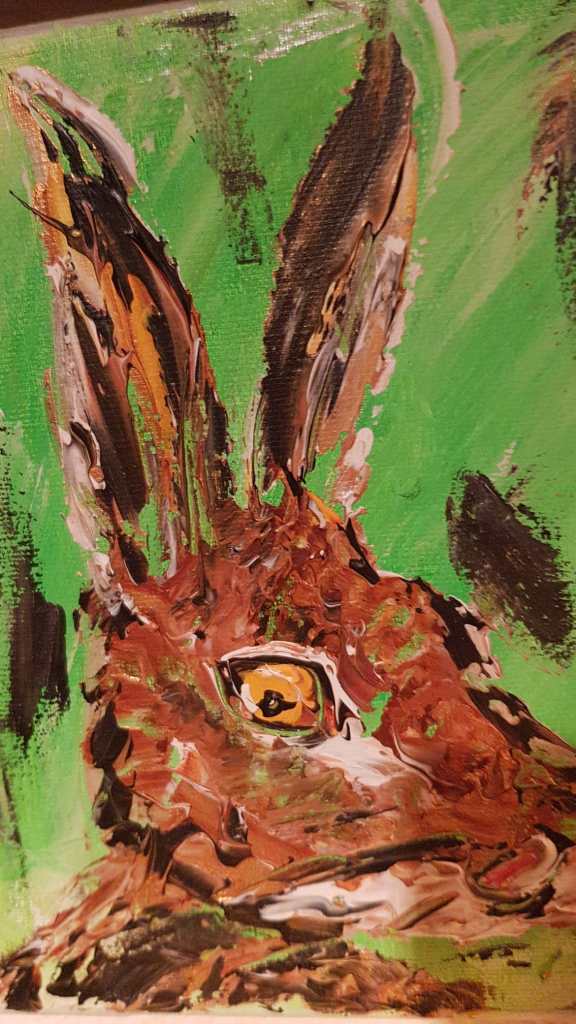
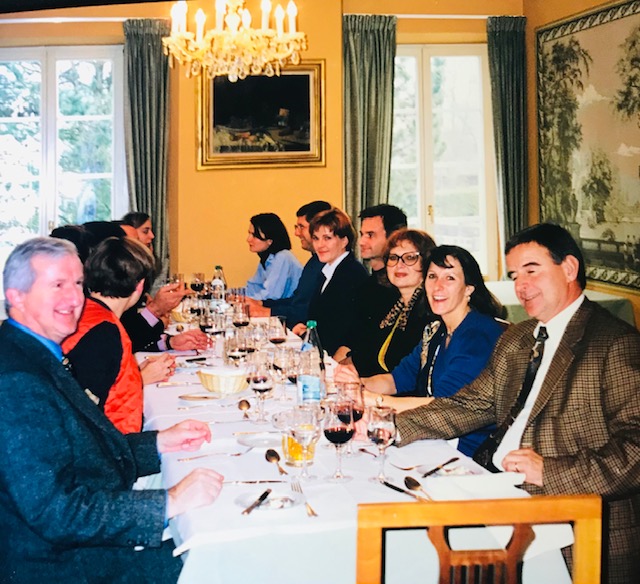
During my first official visit to Germany, in connection with a product development study, my friend Hans Werhonic, had arranged lunch at a place called ‘Cercle de l’Union”l- it means ‘The Circle of Union’, originally a conservative political club where Hans was a member. It was run by Jean Pierre Corpataux, a butcher, a cook, eccentric and above all a well-known painter and artist. You may find below, one of his beautiful paintings displayed at that place. He got an entry into the Guinness Book of Records for making the longest blood sausage. I have been informed that it is still going strong, and is now called ‘Hotel de Ville’, and this club is apparently rented out to the family now running the restaurant. When I visited this restaurant, I saw a board right at the entrance, displaying an Indian and another county flag. I understood this was their respectful practice every time an official guest was taken to their restaurant.
No matter where I went or looked, I saw the details of their entry to the Guinness Book of Records as the maker of the longest blood sausage. This made me very upset as Hans knew very well of my food habits. Seeing and sensing my body language, he told me “don’t worry Shivaram, I have made arrangements for your vegetarian meal”. This obviously gave me a bit of relief as I was indeed very anxious. Subsequently, Jean Pierre personally brought the special item he had gotten made for me. It was a pizza-like dish with cheese and vegetables without onion/garlic (as is my preferred taste) and dressed with a variety of pulses. It looked a lot like our South Indian Uthappam to me. It was so very tasty that I ordered one more. Thus, my belly was full and I left the restaurant, happy and satisfied with the care and love I received from my friend. This mark of respect is clearly etched on my mind as our beautiful such memories of life’s journey.
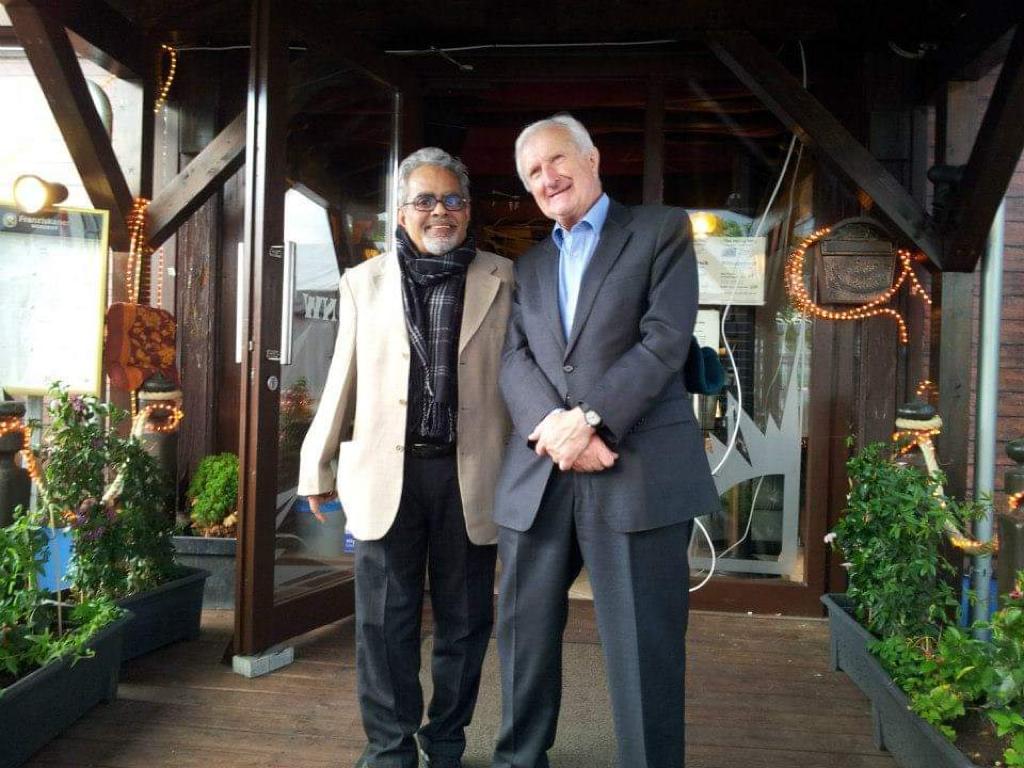
Hans as I call him is Swiss, now retired from business and an advisor to the Swiss parliament. He calls me by my first name Shivaram after spotting this little detail in my passport while processing a visa to Europe. No one, including my children, knows this as my first name.
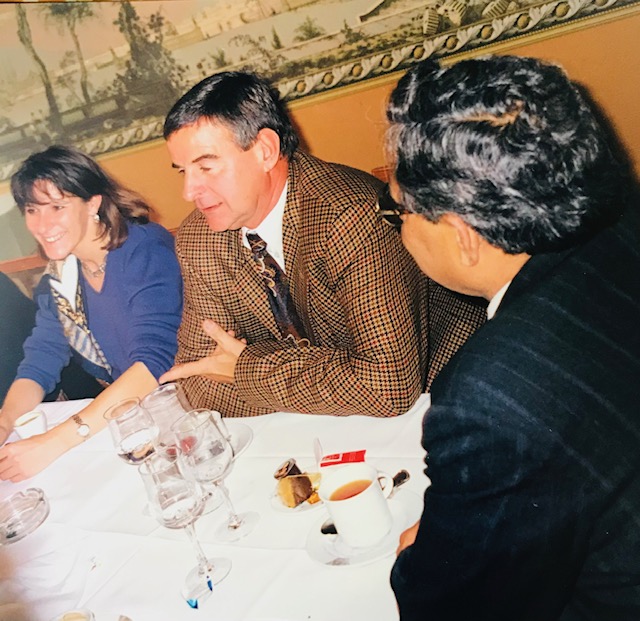
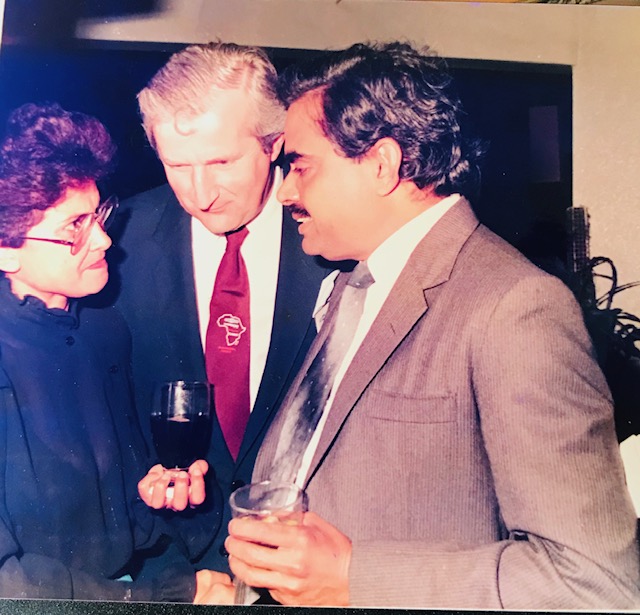
With Hans(Left) on the lunch table
Me at the center
A similar thing happened many times during seminars and meetings, especially at Nairobi, Kenya, where the attendees were whites, Africans and a few Asians who mostly were meat and fish eaters. Many of the times, our meals used to be in different venues at the city centre. Once, there was an international seminar arranged at a beautiful restaurant called Carnivore at Langata on the outskirts of Nairobi. This place was called Karen, which was dominated by whites during the British Rule. Karen was a very beautiful town with large mansions with acres of farmland and posh clubs. An award winning film called ‘Out of Africa’ was shot at this place and a very nice museum called Karen-Blixen stood in memory of the film. This Carnivore hotel, where our lunch was served, was as well-known for its variety of meat preparation. I was informed that you could name any type of meat and that would be served. I was helpless and once again my friend came to my rescue and told me not to worry. A special dish would be served to my requirement. And true to his promise, a pure vegetarian dish, similar to our Kerala AVIAL was given to me with rice and curd. Typically, during seminars in the city center, when it was lunch time, I used to skip and return home for meals.
Lunch at Carnivore with Hans (Center) and a South African Delegate
But in Saudi Arabia, where I stayed alone for six months, it was indeed a nightmare. I managed my food during this stint with just Arabian specialty cheese bread Quboos, banana and a pint of milk / butter milk. Occasionally, my very close friend Sarma and his wife Dr.Jayashree brought some sumptuous meals to me. I must confess those moments always seemed like an oasis in a desert.
Am I glad, the world has moved on from those struggling days even though I was blessed with great food by my sensive friend Hans.
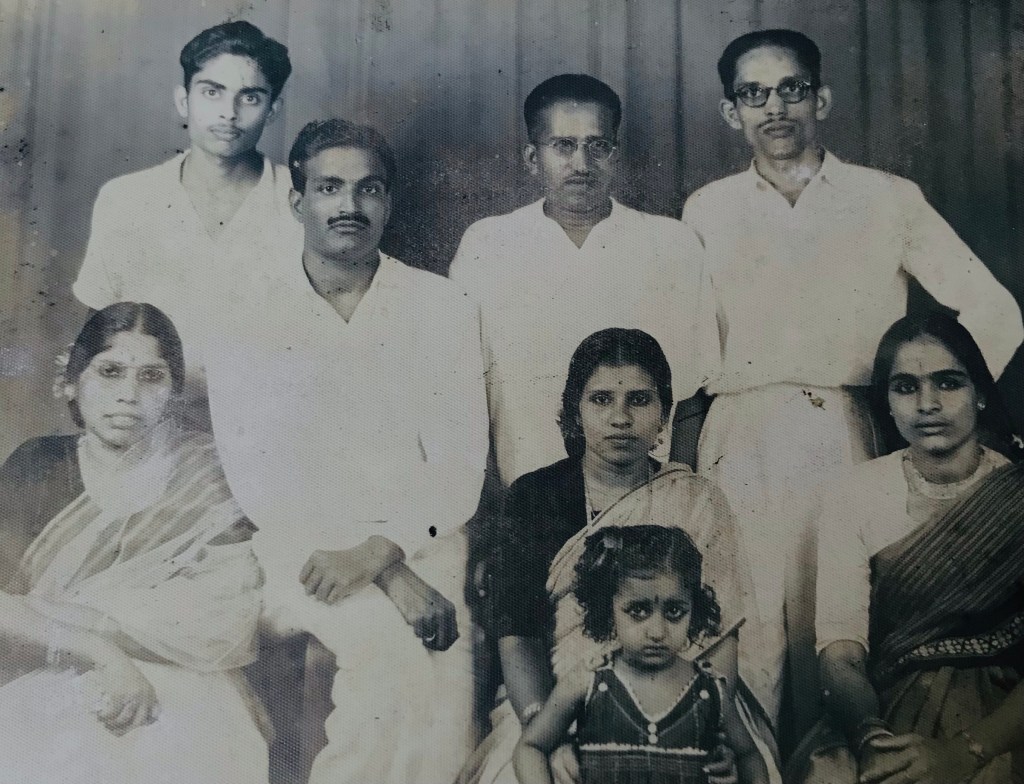
I was born in a remote village. Kunnackal, in Ernakulum district – today not-so-remote as it has fancier neigbours ubeing just 16 Kms from Kochi International airport. Ofcourse, today, nothing is remote either thanks to the internet and the world is delightfully at hand.Those days, when I grew up, there was no electricity, roads or any infrastructure available.
Our house was perched on a small hill surrounded by lush paddy fields in the front which partly covered the south side as well while coconut and areca nut trees covered the other part ; the north was surrounded with huge mango and jackfruit trees. I still remember the mangoes which were so very sweet – and to this day I feel it was the sweetest as is my memory of those days. Years later, I would compare them to the taste that came closest which were but the Alfonse mangoes of Ratnagiri. Similarly, the Jackfruits too were so sweet that I could not find its sweetness anywhere else.
As children, we named each tree with special names like honey, sugar and so on. During the monsoons when heavy winds blew, we rushed to pick those ripe ones which fell right into baskets we held up with severe competition cropping up amongst us kids on who would net the maximum mangoes. This was one of the most interesting games of our childhood. My father had a penchant for planting various types of trees in our area. He tried to grow grapes and oranges but could not succeed in that climate. All other fruit bearing plants like coffee, badam, cashew, guava, etc were also grown. Almost all types of vegetables and pulses were found in our farm. Quite obviously, we did not have any stores nearby. However, we were self-sufficient in managing our provisions except dried chillies and salt. One would be surprised to know that I saw eggs for the first time in Bombay; yes those simple eggs which is such a staple in everyone’s life!!! We had grown up in such an innocent environment that nothing was known to us about the world outside including any non-vegetarian foods. I was instructed not to touch anything but vegetables and fruits.
One would be surprised to know that I did not eat cabbage because in our language, malayalam, the name starts with egg. Small baby onions were the only so called vegetables we used to bring from the outside market in town. Those days, my oldest sister, Subhadra and who us siblings called Valliachi, used to store fried onions with grated coconut and other ingredients for sambar/theeyal. As a six or seven year-old boy, I used to pick up only those red onions and eat it thinking it was a sweet savoury. And when it was time for my sister to grind the masala, she would discover that not a single onion was left. I still remember how annoyed she used to be and how she cursed me after giving me a severe shouting. I somehow think today that this is probably the reason for me to hate onion and garlic. Much later during my Gujarat stay, I was very happy to note that in hotels there, especially the followers of Jain community touched neither of these.
Being born after three sisters, I was truly the pampered one. If I didn’t get what I wanted, my poor sisters ended up getting punished as it became their job to serve me all that i desired:). My father was rather very strict and we got very little time to interact with him. Only after he left for his office did we get the opportunity to play outside or climb trees, which I was so incredibly fond of.
My four years of primary studies in our village school was indeed very exciting. Being a member of the first family of that area, all the responsibility of education was given to the Head Master of that school, who fortunately for us, stayed in our outer house. In the evenings, it became his duty to come home to give us extra lessons.
Those days, we had no exam stress because there were no class exams and all of us were passed and all of us automatically graduated to higher classes. This school was about 2/3 kilometres away from our house and we had to pass through green fertile paddy fields while treading carefully as we walked along the incredibly narrow pathways. And because of this precarious treading, there used to be someone or the other in our family whose duty it became to hold my shoulders tightly as we navigated our way or lift me up wherever required so I didn’t fall into the wet dense fields.
After my primary education here, I went to middle school which was about 8 to 10 Km away along with my sisters and cousin brothers from my father’s family. Being the youngest among them and since my name Aniyan also meant younger, I was very happy to go with them, even though they were not thrilled to take me with them. The Head Master of the school was Stephen Sir and he too arrived freshly from another town with his newly married wife who was also a teacher. They took a liking to me and often used to take me to their school quarters. I still remember how they placed me on their knees and gave me sweets, which I very shyly accepted. The other classmates used to tease me soon after I returned from their quartersv as it was clearly apparent I was a favourite. I left that school after completing three years of studies to a high school in a then major town, Muvattupuzha, which was about 23 Kms away. Walking every day to school and that too such long distances, through a forest, paddy fields and small streams and rivultets was not possible. So, my mother requested my grandparents to let me stay with them, as they lived merely 2to 3 Kms away from school and so the rest of my school days were spent with them. We walked about 15 to 20 minutes from my grandfather’s house to reach the school through a river, and frankly that was possible only when the water level was low. But during the monsoons, we would not dare to cross it and we always took a roundabout way which unfortunately took double the time. My grandfather was so strict that even a minute’s delay and he would demand an explanation! Soon after returning from school. we had our baths, which was absolutely compulsory, and we had to sit down to read the newspaper for him. Thank God, there were only 4 pages unlike today. In our front sit-out, the moment I started reading, sitting on his easy chair, he used to start snoring. If I skipped any line, he always questioned. me That’s when I understood that he had in reality read the papers fully and this activity was only to cultivate reading as a habit for me. So though I was much tired and hungry, I had to complete the paper from the headlines to the printed and publishers’ name . Only then did I go for my evening prayers and have my porridge with pappadam and chutney. there were no limits on how much we could eat; but there was no change ever in the menu. So, typically, we waited for Friday and weekends to go to our village home and get some variety in our meals. My father sent all the provisions and food items for my grandparents back with us in compensation for our stay and living expenses. Unlike my earlier schools, I had to do homework for the next day. Sometime, my head would nod sleepily and drop off in the sheer fatigue of an exhauting day and spotting this, my mutacha would signal and send us stern messages through our grandmother. For this, he cleverly positioned his chair in a particular angle against a mirror to view us from the other side. My uncle, a maths teacher and a very jovial guy, sat on the other side of the study table and did all the corrections of student papers. He cracked very funny class-jokes and always kept me laughing loudly. Ofcourse this annoyed my grandfather no end and he unfailingly shouted at me from the other side of the room, which I recall . . .scared me quite a lot:)
However, I passed my high school public exam with 59.5% marks; but unfortunately could not qualify for engineering college admission, which was truly my dream. Unlike today, a first class (60%) was a big score, however I lost by this slim margin and it made me very upset. But when I came to know that my friends who had 12/15% less marks than me, got admission into medical and engineering colleges because of reservation, it truly shattered my dream. By that time, all college admissions were closed and we were sure that I would lose that year for further studies, which really depressed me. Finally, a new college with a rather poor infrastructure opened up closer home and I gained admission there for FY and Inter, which is today’s 12th standard. After I completed my studies here , it was time to hunt for colleges. My uncle, who sponsored my higher studies, lost his job abroad and I was back again to square one. It was indeed a distressing time .
From here on, my oldest brother, Valliyettan who had great trust in me and my abilities, took on the onerous responsibility and shifted me to Bombay, which is now called Mumbai – which was truly the turning point in my life. What was remarkable about his generosity was the fact that he was newly married himself and disregarding his own need for privacy, he happily welcomed me into his life.
My life is proof of how a simple village boy can be transformed to face any challenges in life. I have this important advice for the youth of this present generation – that they must live in this city at least for a few years as it prepares you to meet every situation they are likely to face in life. The city teaches you hardships and also offers you plenty of opportunities. And so, brick by brick, I built my life with all that Life had to hand out but the sweetest memory of them all – is that no matter where you are from … impossible is nothing. Grit, determination and the love of Family are the founding pillars of Life. But most important is the wealth of pricelses lessons from our elders of Kunnackal – a not so developed village . Almost everyone who was born and grew up or have roots there – have gone along to various parts of our country and the world, and become respectable citizens. This is such a matter of pride for me and our Kunnackal family.
My visit to the Daimler- Benz Museum and Production complex.
Sindelfingen near Stuttgart.
23rdJune1988.
My visit to Germany was not an official one. Those days I was working at Nairobi- the capital of Kenya in East Africa. It has been accepted as one of the best countries in the world for its scenic beauty, wild life, national parks and above all the uniform climatic conditions. The temperature varies between 12 to 30 degree Celsius and one didn’t need a fan or heater throughout the year as long as I stayed there. This country was also ruled by the British and got Independence after India. There was a facility at that time where airlines offered triangular tickets from Nairobi thru London onto Bombay and I often availed that.
I first went to Zurich where my brothers in law lived and made arrangements to go to Germany, where another brother-in-law and his German wife were staying. He came to pick me up from the Stuttgart railway station and we went straight to the museum and production complex of of Daimler-Benz at Sindelfingen, where he also worked. I enjoyed his midnight blue color Mercedes car and was surprised hearing old Malayalam KPAC drama songs. The factory was about 30 minute drives from station. He had registered me as a visitor. After tea and snacks, we waited at the lounge before being taken to an auditorium for a film show of the history of the company lasting 30 to 45 minutes.
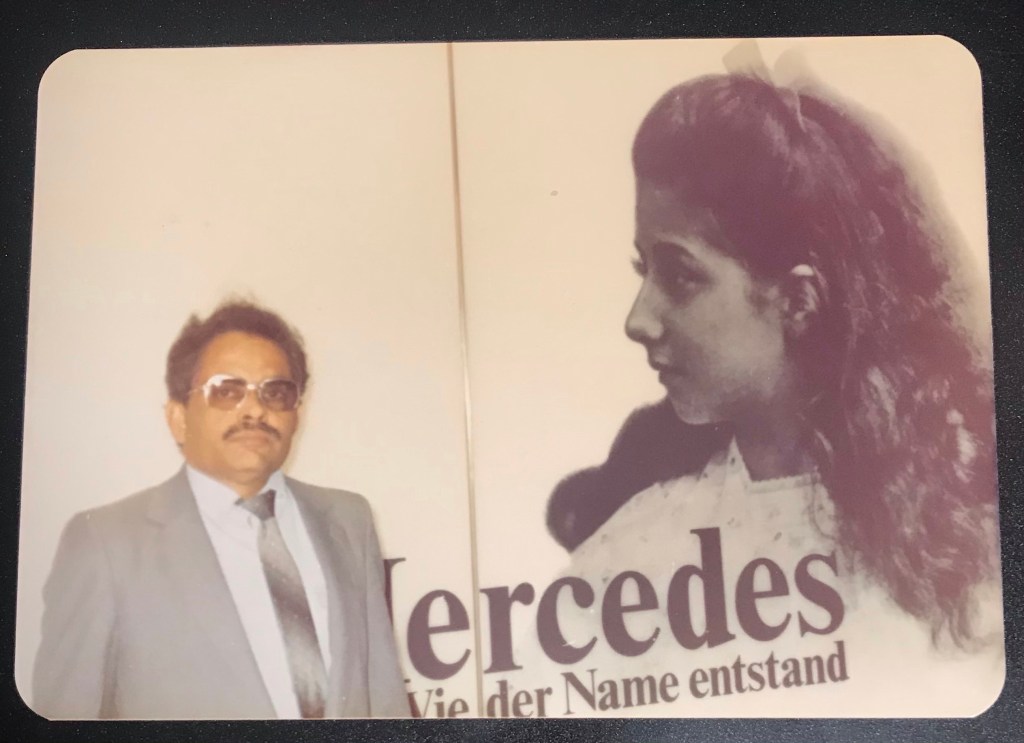
The team explained a short history of Daimler Benz Company before the tour. Two German Engineers, Gottlieb Daimler and Karl Benz did studies of developing automobiles separately and invented engines as early as 1885/86. Both being Germans, they later decided to work together and thus Daimler-Benz Company was formed in the year1926. That was the time the business of automobiles was an unknown and there were not many takers of this product. The founders realized that the whole idea was not found very attractive and economically feasible unless produced at scale. At that time a wealthy man approached them to place an order for about 350 cars, with a condition that the cars must be named after his daughter MERCEDES, which was a huge attraction to the company. Happily the order was signed. Even at that time, a huge photo of Mercedes was displayed at the entrance and I took permission to take a snap standing by the side.
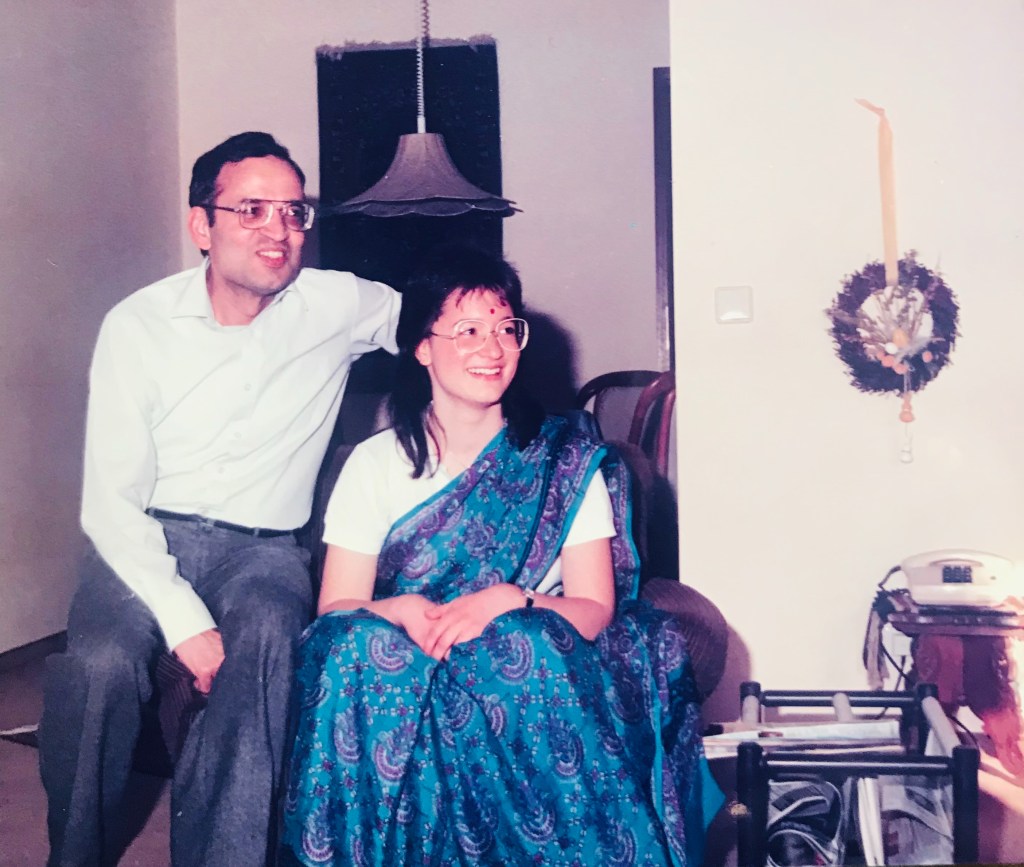
My brother in law with his wife Rosemary
After that about 30 of us-visitors were taken in an electric bus for the factory tour. The first processes were of metal cutting /punching to various sizes, in a row of hydraulic presses. At the next stage these were then sent to the body shop for automatic welding. This was quite a huge scene to me, because of its gigantic size – almost over 1000 Tons of sheet metal! From there it went to the paint shop for coating different layers of special paints. After that to the assembly section, where the engine, gear box and other transmission work, which they called “marriage section”. Then these would be moved to wiring, fixing of electric items, batteries and so on. Lastly the tyres, front and rear glasses, mirrors, wipers etc are fastened before being sent for inspection and intense testing. For each batch of cars produced, one car had to undergo crash test under their strict quality standards. What made me wonder struck was the precision at which the automatic machines were being managed without any hindrance in the process. Almost all parts from engine, gear box and various other components were managed from over one thousand vendors across the country. Rajettan –my brother in law, said the inventory was only for 24 hours. The management had given them a task to reduce it to 18 hours! The R&D was working very hard to eliminate the embedded wire in the rear mirror to be invisible. Places like India and Kenya, where our materials management was struggling to keep inventory for months, that they were talking of hours was another wonder for me!
If I remember, I then went to meet his boss, an Indian from SouthIndia Dr.Subramanyam, who was considered an authority in the field of gear box systems in Europe. He always busy making presentations and meetings. I noticed that the company was doing excellent human relations to keep the staff and workers happy. Staff was offered new cars every year at discounted rates. Most employees got cars at the beginning of the year, used them for a year and sold them at the year end in an immaculate condition after driving over the stipulated 750Km. This gave Rajettan a chance to visit his brothers in Switzerland over Christmas.
I could learn a lot from this visit technically and about management systems. It was my fortune to get such an opportunity to visit one of the largest auto mobile manufacturing factories in the Globe. After my full day journey and visit, I returned back to Switzerland by train, without going to his residence, due to lack of time. I promised to return to visit their house, in Black Forest, which I could do only after almost two decades.
In front of The Mercedes girl in the Daimler Benz show room
My visit to the Daimler- Benz Museum and Production complex.
Sindelfingen near Stuttgart.
23rdJune1988.
My visit to Germany was not an official one. Those days I was working at Nairobi- the capital of Kenya in East Africa. It has been accepted as one of the best countries in the world for its scenic beauty, wild life, national parks and above all the uniform climatic conditions. The temperature varies between 12 to 30 degree Celsius and one didn’t need a fan or heater throughout the year as long as I stayed there. This country was also ruled by the British and got Independence after India. There was a facility at that time where airlines offered triangular tickets from Nairobi thru London onto Bombay and I often availed that.
I first went to Zurich where my brothers in law lived and made arrangements to go to Germany, where another brother-in-law and his German wife were staying. He came to pick me up from the Stuttgart railway station and we went straight to the museum and production complex of of Daimler-Benz at Sindelfingen, where he also worked. I enjoyed his midnight blue color Mercedes car and was surprised hearing old Malayalam KPAC drama songs. The factory was about 30 minute drives from station. He had registered me as a visitor. After tea and snacks, we waited at the lounge before being taken to an auditorium for a film show of the history of the company lasting 30 to 45 minutes.
The team explained a short history of Daimler Benz Company before the tour. Two German Engineers, Gottlieb Daimler and Karl Benz did studies of developing automobiles separately and invented engines as early as 1885/86. Both being Germans, they later decided to work together and thus Daimler-Benz Company was formed in the year1926. That was the time the business of automobiles was an unknown and there were not many takers of this product. The founders realized that the whole idea was not found very attractive and economically feasible unless produced at scale. At that time a wealthy man approached them to place an order for about 350 cars, with a condition that the cars must be named after his daughter MERCEDES, which was a huge attraction to the company. Happily the order was signed. Even at that time, a huge photo of Mercedes was displayed at the entrance and I took permission to take a snap standing by the side.
After that about 30 of us-visitors were taken in an electric bus for the factory tour. The first processes were of metal cutting /punching to various sizes, in a row of hydraulic presses. At the next stage these were then sent to the body shop for automatic welding. This was quite a huge scene to me, because of its gigantic size – almost over 1000 Tons of sheet metal! From there it went to the paint shop for coating different layers of special paints. After that to the assembly section, where the engine, gear box and other transmission work, which they called “marriage section”. Then these would be moved to wiring, fixing of electric items, batteries and so on. Lastly the tyres, front and rear glasses, mirrors, wipers etc are fastened before being sent for inspection and intense testing. For each batch of cars produced, one car had to undergo crash test under their strict quality standards. What made me wonder struck was the precision at which the automatic machines were being managed without any hindrance in the process. Almost all parts from engine, gear box and various other components were managed from over one thousand vendors across the country. Rajettan –my brother in law, said the inventory was only for 24 hours. The management had given them a task to reduce it to 18 hours! The R&D was working very hard to eliminate the embedded wire in the rear mirror to be invisible. Places like India and Kenya, where our materials management was struggling to keep inventory for months, that they were talking of hours was another wonder for me!
If I remember, I then went to meet his boss, an Indian from SouthIndia Dr.Subramanyam, who was considered an authority in the field of gear box systems in Europe. He always busy making presentations and meetings. I noticed that the company was doing excellent human relations to keep the staff and workers happy. Staff was offered new cars every year at discounted rates. Most employees got cars at the beginning of the year, used them for a year and sold them at the year end in an immaculate condition after driving over the stipulated 750Km. This gave Rajettan a chance to visit his brothers in Switzerland over Christmas.
I could learn a lot from this visit technically and about management systems. It was my fortune to get such an opportunity to visit one of the largest auto mobile manufacturing factories in the Globe. After my full day journey and visit, I returned back to Switzerland by train, without going to his residence, due to lack of time. I promised to return to visit their house, in Black Forest, which I could do only after almost two decades.
My visit to the Daimler- Benz Museum and Production complex.
Sindelfingen near Stuttgart.
23rdJune 1988.
My visit to Germany was not an official one. Those days I was working at Nairobi- the capital of Kenya in East Africa. It has been accepted as one of the best countries in the world for its scenic beauty, wild life, national parks and above all the uniform climatic conditions. The temperature varies between 12 to 30 degree Celsius and one didn’t need a fan or heater throughout the year as long as I stayed there. This country was also ruled by the British and got Independence after India. There was a facility at that time where airlines offered triangular tickets from Nairobi thru London onto Bombay and I often availed that.
I first went to Zurich where my brothers in law lived and made arrangements to go to Germany, where another brother-in-law and his German wife were staying. He came to pick me up from the Stuttgart railway station and we went straight to the museum and production complex of of Daimler-Benz at Sindelfingen, where he also worked. I enjoyed his midnight blue color Mercedes car and was surprised hearing old Malayalam KPAC drama songs. The factory was about 30 minute drives from station. He had registered me as a visitor. After tea and snacks, we waited at the lounge before being taken to an auditorium for a film show of the history of the company lasting 30 to 45 minutes.
The team explained a short history of Daimler Benz Company before the tour. Two German Engineers, Gottlieb Daimler and Karl Benz did studies of developing automobiles separately and invented engines as early as 1885/86. Both being Germans, they later decided to work together and thus Daimler-Benz Company was formed in the year1926. That was the time the business of automobiles was an unknown and there were not many takers of this product. The founders realized that the whole idea was not found very attractive and economically feasible unless produced at scale. At that time a wealthy man approached them to place an order for about 350 cars, with a condition that the cars must be named after his daughter MERCEDES, which was a huge attraction to the company. Happily the order was signed. Even at that time, a huge photo of Mercedes was displayed at the entrance and I took permission to take a snap standing by the side.
After that about 30 of us-visitors were taken in an electric bus for the factory tour. The first processes were of metal cutting /punching to various sizes, in a row of hydraulic presses. At the next stage these were then sent to the body shop for automatic welding. This was quite a huge scene to me, because of its gigantic size – almost over 1000 Tons of sheet metal! From there it went to the paint shop for coating different layers of special paints. After that to the assembly section, where the engine, gear box and other transmission work, which they called “marriage section”. Then these would be moved to wiring, fixing of electric items, batteries and so on. Lastly the tyres, front and rear glasses, mirrors, wipers etc are fastened before being sent for inspection and intense testing. For each batch of cars produced, one car had to undergo crash test under their strict quality standards. What made me wonder struck was the precision at which the automatic machines were being managed without any hindrance in the process. Almost all parts from engine, gear box and various other components were managed from over one thousand vendors across the country. Rajettan –my brother in law, said the inventory was only for 24 hours. The management had given them a task to reduce it to 18 hours! The R&D was working very hard to eliminate the embedded wire in the rear mirror to be invisible. Places like India and Kenya, where our materials management was struggling to keep inventory for months, that they were talking of hours was another wonder for me!
My brother in law Rajettan with his German wife
I could learn a lot from this visit technically and about management systems. It was my fortune to get such an opportunity to visit one of the largest auto mobile manufacturing factories in the Globe. After my full day journey and visit, I returned back to Switzerland by train, without going to his residence, due to lack of time. I promised to return to visit their house, in Black Forest, which I could do only after almost two decades.
It was about 25 years ago that my wife and I lived in Zanzibar, an African Island. This used to be known as the center of slave trade in the 15th century which was abolished in 1822.
Zanzibar has a beautiful tropical climate suitable for spices and is known for its excellent quality of cloves and many other spices. Bright mornings and heavy rains in the afternoon made us enjoy the rain and it reminded us so much of our Kerala days. We stayed in an apartment designated for our estate manager and it was close to one of the most beautiful beaches in Zanzibar. I was forced to stay there due to the sudden death of our Project manager who passed away after a cardiac arrest. Due to this, the Estate manager had to accompany the body to his native Village at Kerala and as requested by my Director, and I had to stay there for one month. So I rushed from my office at Mombasa, to Zanzibar to take care of the plantations and plant.
Just to give you a perspective, Zanzibar was a socialist Republic under Tanzania State. Most Zanzibaris are short in height. When I enquired about the reason for this, I was informed that about the slave trade business of the 15th century. This was new information to me at that time and had such little knowledge about it. Google, Wikipedia were not available those days and so we depended on some details from locals. They took us to the old port where this was going on. There were some old barracks-sheds, a few meters away from that place. Slaves were apparently bought and brought to those old barracks from far away African and Asian countries and were housed there. When there were a sufficient number of people collected, the traders called ships and sent them away to European and American countries. Once the ship arrived, they were called one by one and were asked to pass through a tunnel: gauged like a “GO” and “NO GO” passage. Those who passed this gauge were sent to the ship directly and those who did not pass this measure, mainly of a particular height were sent back to the Zanzibar Island. That was the reason why Zanzibaris were shorter in height. They worked in plantations on the island. This trade business started doing good business and by the 16th century, regular companies were formed , supported by the governments of their respective countries. They were bought and sold and were treated rather inhumanly. They lived in pathetic conditions often resulting in large scale deaths.
We enjoyed our stay at this small but beautiful island with its stunning scenic beauty and enjoyed interacting with the innocent and sincere locals. I recall how we used to finish our dinner fairly early and devoted time to read inspiring life stories including our favorite story of Lee Iacocca. Quite unlike today where we kill time by watching television programmes.
My main job was to set up a processing unit for Natural Rubber latex and convert them into rubber sheets of marketable quality. The World Bank helped us set up rubber plantations in the Islands of Ngunja, Pemba, Mnemba and so on. They spent the allotted money and largely left the place after the investment for local teams to run the management of it subsequently. In a matter of seven years’, the plants grow to the tapping stage. Due to lack of experienced persons, the locals were found to take the latex and roll them into balls and invariably collected these in huge numbers. To their misfortune, It started attracting insects and with continued rains and climatic changes, started emitting an excessively foul smell. I still recollect the time when some traders brought them to me at a throw-away rate; this was also a time when natural rubber was in short supply widely. On enquiry, it was found that they were from these estates. I remember suggesting to them that they process them in a professional way and agreed to help them set up a modern unit there. I bought all required machines from the rubber growing state of Kerala, India and shipped tappers and managers too from there. To my pleasant surprise, the yield there was almost doubled and sometimes trebled that of the local Indian Estate. After completing my job at the East African Plantations, I left to another small Island in the Middle East called Bahrain, close to Saudi Arabia. Here again, the job was to start the first Rubber Factory to produce special rubber and Polyurethane products for all GCC countries. Being a pioneer company, although plenty of concessions were given by the Government of Bahrain under the able leadership of its rulers, we experienced mountains of setbacks at every stage to establish it as a lead medium factory and it was indeed rewarding when we managed getting an award for excellence in the shortest span of only four years! While there were a lot of hurdles as a professional, this was the most satisfying job carried out by me.
But my beautiful days at Zanzibar are marked in my memory as enchanting and many of my friends always ask me to go down my Zanzibar memory lane
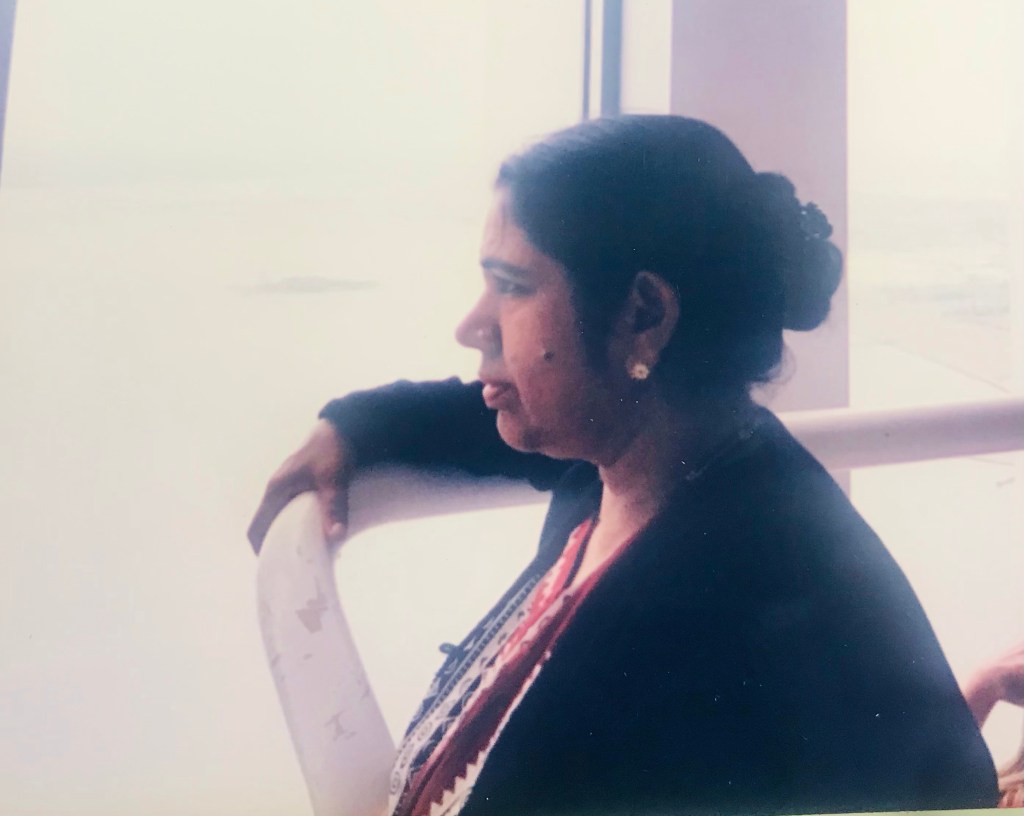
On the balcony my wife KAMALA enjoys the beautiful beach and the dancing cocoanut trees


 Aniyan’s Blog