Yes. Much water has flowed under the bridge. Days, months and years passed by like a stream. I became a part of the city of dreams, fashion, financial capital of India and the largest city in the world producing over 300 films per year. This city showcased many more Industries such as diamond, sports and various other manufacturing hubs. The unity in diversity of Bombay, can be seen during celebrations, whether it is National – like Republic or Independence days, Diwali or Dassehra, Easter or Christmas, Bakrid or Muharram, Parsi New year or Guru Nanak Jayanti or any south Indian festivals such as Onam, Pongal or others. We, as Bombayites, go and participate in all festivals like, Ganesha Chaturdhi, Bandra fair or Thursday mass at Mahim church or the famous Rangoli competitions at the Dadar Hindu colony; we friends were there to enjoy in groups. Hence I could not have thought anything other than living in Bombay with its serene and cosmopolitan outlook. For all other Indians, South Indians are known as Madrasis although four important states are represented in South.

Here, I contemplated; knowing that the basics of rubber Industry would be useful to follow the subject. The rubber Industry is classified in two categories Tyre and Non-tyre Industry. Large part of rubber (approximately 65%) was used for Automobile and aircraft Tyres and 35% for Non Tyre products. Compounding knowledge for manufacturing Tyres, was not very necessary; but the technology differs. Whereas, in the case of compounding for non tyre products require in-depth knowledge. The formulations and designs vary for different industrial and commercial uses. For example, the formulations and designs for every product such as hose pipes, oil seals, shock absorbers, fenders and bridge bearing pads, food and hospital products, rollers and mountings for heavy industry and adhesives and many parts for the footwear industry. There are endless items to name. To my knowledge, there is not a place where rubber is not used. This may be compared with a doctor prescribing medicines for individual ailments. In the same way, the chemist/technologist has a big role and responsibility to design formulations and make products for the desired end use.
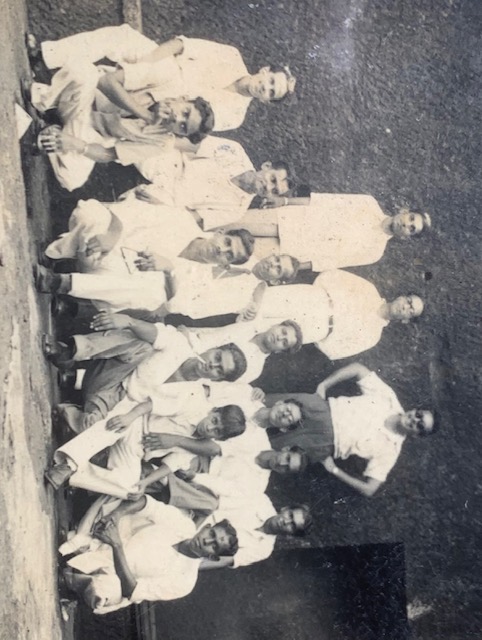
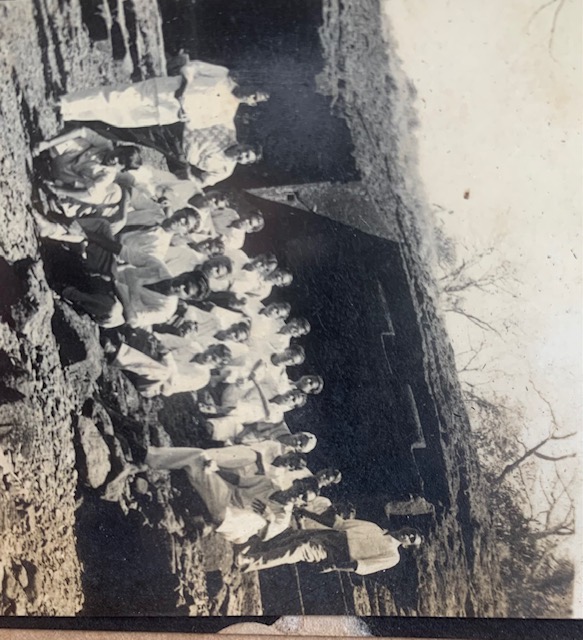
My experience confirms to me the saying that what we learn in schools is only 25% and the rest is all by observations, experience, self-studies by our own research. That could be the reason why even highly qualified persons were struggling to get into the slots. I still remember two instances – one from Canada, a highly qualified rubber Technologist and another a doctorate in high polymer Science from London – who wanted to join our company in Kenya even at a junior level. I consider myself very fortunate to get trained in this company, which provided me amazing experience, self- confidence and practical training under well qualified experts in this field at that time. The training period was extremely tough and an awfully dirty job. I remember those days how pillows were not even provided to me as it was turning black from the carbon from my hair, inspite of several washings. From a total of 18 persons who joined the company, only two remained to complete the course. I was trained in every department of the factory, laboratory and R&D. Thus after the exhaustive training, I became a complete technician to go into the field with real hands-on experience.
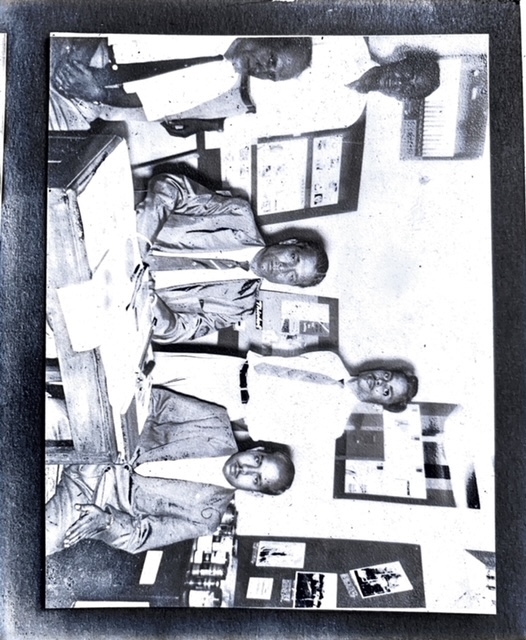

Thus with his approval and blessings from my sister in law – edathyamma, who was till then looking after me like a mother, decided to leave for Ahmedabad. Until that time we had little knowledge of Kalol, North Gujarat, where the factory was situated. We looked through the map, booked my ticket. That was the year of division of Maharashtra and Gujarat from the Bombay state and the Republic day parade was celebrated in an ecstatic and lavish way with light and sound at flora fountain. Most of the Bombayites attended in huge numbers. My friends and I went to see this special function, which was overcrowded with absolutely no place to stand either. So we climbed onto a bus stand, many more tried to climb up too. Suddenly it collapsed trapping me and others inside the roofing materials. The police arrived for the clearing and pulled me out of it. My leg was broken and my friend took me to Nanavati hospital, Vile Parle in an ambulance. As there were serious cases on that day, I was the last patient they attended to. After treatment and plastering the broken leg I reached home, where I got enough ‘shouting’ from my brother. I was quite worried about this accident because my joining date to the new job was nearing. As the company needed me, they told me to come whenever my health improved. After a month’s waiting I joined the new job on a walker. Everyone got surprised to see a young boy in a walker and wondered about my role and what could I do what in such a complex factory? To me coming from city of Bombay, everything looked different including language and culture. In the evening a couple of “Kerala people” came and introduced, which helped me to settle down comfortably. My office also took special care and helped me settle well. The hospitality of the community and staff impressed me and relieved my initial concern of settling in a new place all alone. Once I. started my regular job, all the people from family, friends and staff were happy and pleased. The factory workers too helped me in learning the local language in their dialect and I found them very cooperative. I always believed that workers are experts in their respective fields and their expertise and cooperation was very important in these sorts of circumstances. I could learn a lot from them and their experiences helped me to settle down and improve production, quality and the performance in a big way at the shortest time. An advisor, classmate and colleague of the MD, a Gujarati and US citizen with postgraduate degree in high polymer chemistry from MIT joined to help me. He taught me modern management system and discipline in business. I can never forget his brilliant advices and brotherly affection .His amazing personality, discipline and connections were very useful in my life. He introduced his friends to me – like the well-known Milkman Dr.Varghese Kurien and the genius architect Charles Correa and took me along when he visited them. This also helped in moulding my career in professional life. Almost every fortnight, I used to travel to Bombay to meet my brother and discuss our family matters. This kept my routine life pleasant without any hiccups. When I think back today, I am baffled. A long gap of seven years away from meeting dear ones is a costly loss and another lesson I learned. I lost a lot not being around my loved ones and living so far away from them during so many years. First 3 years I somehow managed the urge of not meeting them and then slowly the intensity got reduced. After six years it was almost forgotten. I was unable to visit home due to the change of jobs and cashing in the available leave for our family. When I contemplate this through the lens of spiritually, I console myself as it was a selfless act and surely it is just small sacrifice. I still don’t know if was it good or bad. But staying away from the warm embrace of our families can take its toll, especially from a family like ours where the siblings were so close to each other. This life continued for months and years. The factory progressed leaps and bounds. That was the time composite textile mills experienced problems with labour problems and lack of modernization in machinery. Mills started losing heavily and some were taken over by government. Only companies did diversifications and modernizations survived. A few had changed their style from composite mills to individual units shifting their bases to other places. Large areas were converted into real estates. Many were closed down and thus the name of Manchester of India was lost to Ahmedabad. All our Mills were divided among the owners and our Rubber factory was the only company making profits, which was once a liability to them. This could not survive on its own when others were closed down or shifted. In fact the business was flourishing and our major client Defence of India needed regular supply without any break. Finally, we decided to open a new one at Bombay. Our advisor left back to the US. It was a big challenge to me. I was very fortunate that I took it with proper vision and planning. A couple of people came along as the majority locals did not want to leave their native place. A big appreciation came from the Defense department when the supply continued without any disruption. The production started in the shortest period.
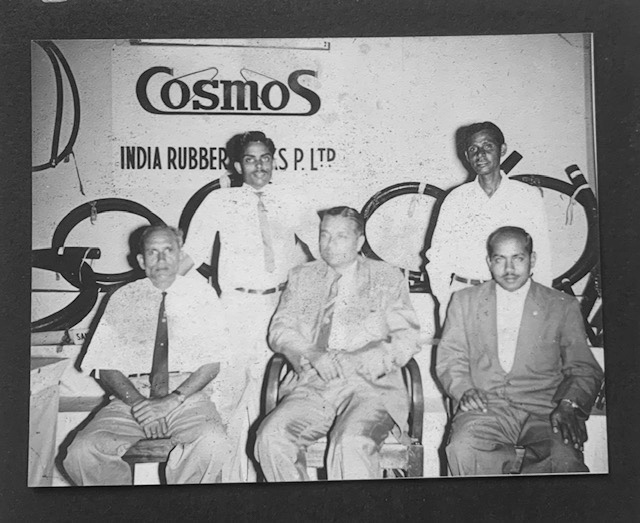
As told before, my factory was very far away, after Chembur in a suburb called Trombay . I had to travel by two trains and two buses to reach the factory at 7 AM! The factory was situated in the middle of three famous studios – RK, Asha and Basant Wadia film Studios. This gave me an opportunity to witness film shootings every day, which otherwise would have been quite boring for a youngster like me. I remember a few like Raj Kapoor’s “ Jis desh me Ganga Bahti Hai, Sangam and Bimal Roy’s Sujatha, where famous Nutan did an amazing role. The Script writer Nabendu Ghosh’s nephew was my college mate at Bhavan’s and he took me to the shooting. During film shooting days, the buses were over crowded with the junior artistes (they were called extras in those days). I had seen many times these poor people struggled for small roles for a petty sum of 15 to 20 bucks waiting at the gate for 16 to 18 hours. Once I cried, when I saw a lady in the bus was beating her child sleeping on her lap while returning from work. Then she was lamenting, as she waited from morning and the call came at 10 PM, that too without food. After reaching her home at Bandra , she had the laborious task of cooking and feeding her family with the money she received by day end. Part of it had to be given to her drunkard husband to avoid abuse and beatings. When we go to the theatres, we do not understand the extent of the process of film making and the struggle the majority of actors and technicians undergo to create the cinema we so comfortably watch in movie theatres or at home. Many times, I used to work on holidays also to complete my work. When any supervisor was absent, I had to go to the production floors to work, as instructed by my boss without any extra money whatsoever. However, these types of hard work put in at the initial period, gave me benefits like double promotions. I enjoyed my work and accepted every job as opportunities. For an exhibition at Calcutta by the All India Rubber Industry, I was deputed to represent my stall, I actually superceded my boss. Again I have been asked to go for site jobs like the one at at Ahmedabad textile Mills. This was a big jump and a stepping stone in my life. After completing the work of rubber lining in the mill, the MD of that group called me and offered a job to take charge of his rubber factory at 300% salary raise with all benefits and car, which I could never have dreamt of at that time. Although this factory was established 25 years ago for their own requirements of rubber products, it did not meet their expectations. Perhaps, they saw my potential and earnestness and invited me to join them. They were one of the largest textile groups in India. When I discussed this offer with my brother, he flatly refused to let me take up this and also did not approve of the idea of me leaving Bombay. He was worried: if I failed, we would lose whatever income I was getting and to find another job would be rather difficult. Secondly, what would and could a boy in his twenties with limited experience do a manager’s job. Also he doubted as at that age, if I left alone with such attractive offers, I could be easily trapped into any affairs; thereby my support to the family would be at risk, which was very important. . At that time we had four sisters and a younger brother yet to be settled in our family. I understood his concern and promised he could trust my ability and would never forget my responsibility to the family until all were well settled. Today, with my mother’s blessings, I have the satisfaction of fulfilling his wishes and the aspirations of the family as an obedient brother.
Thus I started my second innings in Bombay after nearly 10 beautiful years! Meanwhile, I had grown to a confident and more responsible person with family and kids. I learned and experienced life and culture from Gujarat apart from gaining fluency in the language. The people of Gujarat were very hard working, peace loving. I could see very few beggars on the streets. Our workers were found extra earnings by working part time outside the factory work -whether working in cinema halls or selling peanuts on streets or selling fruits and vegetables or anything to make money. Those days, from a very young age, the Gujaratis are taught not to just study and learn in schools and colleges alone; but to try to make money. Today it is the currency of entrepreneurs and startups – those days it was an exception.


Enjoyed reading the narrations of the past years ..very well written..thanks daddy
LikeLike